Research Themes
- Fundamental research on physical properties of actinide compounds by synchrotron radiation X-ray spectroscopy
- Environmental restoration of Fukushima and decommissioning
- Separation chemistry of difficult-to-separate elements and isotopes
- Safety assessment for the geological disposal system
- Chemistry of transplutonium elements
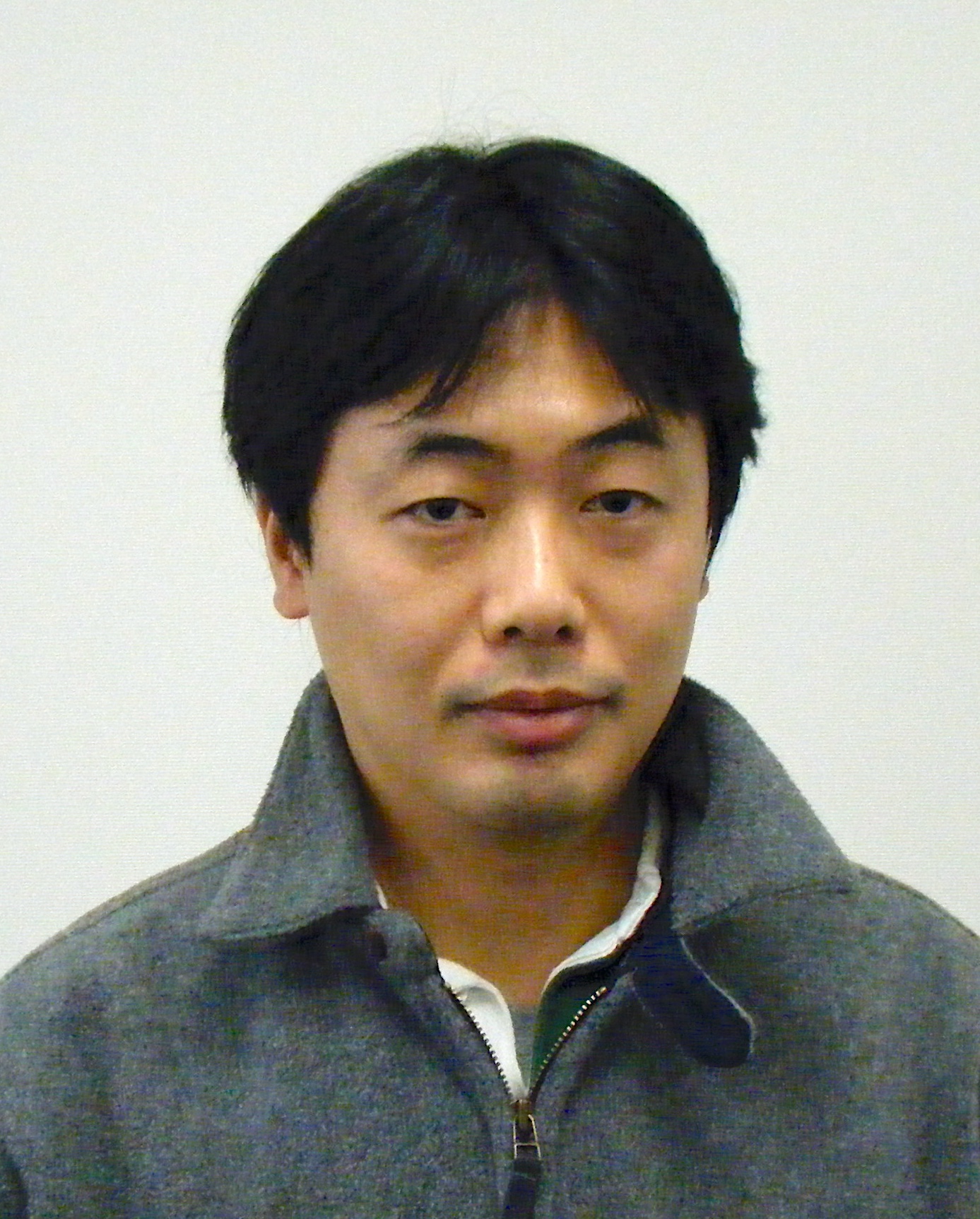
Group Leader
PhD. MATSUMURA Daiju
Research Subjects
The Actinide Science Group conducts physical and chemical researches on materials containing actinide elements. In particular, the JAEA beamlines SPring-8 BL22XU and BL23SU are equipped with experimental stations in the RI Laboratory, which can handle radioactive materials. They are the unique facilities for synchrotron radiation experiments on actinide materials.
1.Fundamental research on physical properties of actinide compounds by synchrotron radiation X-ray spectroscopy
In terms of the fundamental condensed matter physics, actinide compounds are strongly-correlated electron systems that exhibit a variety of novel physical properties. In order to elucidate the mechanism of their physical properties, we study their electronic and magnetic states by synchrotron radiation X-ray spectroscopy. The group has the soft X-ray angle-resolved photoemission spectroscopy (ARPES) station, the soft X-ray absorption magnetic circular dichroism spectroscopy (XMCD) station, and the scanning transmission X-ray microscope (STXM) station at SPring-8 BL23SU.ARPES is an experimental technique that can experimentally derive the band structure and Fermi surfaces of materials. In particular, by using soft X-rays as incident light, the bulk electronic structures of strongly correlated electron systems can be studied. Meanwhile, we study the magnetic properties of materials by XMCD. Soft X-ray synchrotron radiation from BL23SU, can directly excite p-orbital absorption edges in transition metal elements and d-orbital absorption edges in rare-earth and actinide elements, and we can study the spin and orbital moments of the d and f orbitals responsible for magnetism by XMCD. STXM is an experimental technique for measuring spatially-resolved X-ray absorption spectra by focusing X-rays to a few tens of nanometers that enable the evaluation of electronic states in small areas. We conduct researches on spatially inhomogeneous samples such as environmental samples and decommissioning research samples.
2.Environmental restoration of Fukushima and decommissioning
We are conducting researches contributing to Fukushima environmental restoration and decommissioning research. The hard X-ray beamline BL22XU is equipped with a hard X-ray photoelectron spectroscopy (HAXPES) station, and its extremely high bulk sensitivity is used to study environmental samples such as Cs containing samples and simulated structural materials in nuclear reactors. We have discovered that cesium is strongly adsorbed on clay minerals in contaminated soil, especially weathered biotite, by chemical methods. We are exploring highly efficient desorption methods for cesium by physical pulverization using a ball mill, chemical treatment using an interlayer expander, and molten salt electrolysis. We also investigate the possibility of soil recycling, including the development of thermoelectric properties from treated soil and the discovery of strontium absorption effects.
3.Separation chemistry of difficult-to-separate elements and isotopes
For rare metal ions such as lanthanides and actinides, our group has developed mutual metal separation systems by solvent extraction and precipitation separation using novel ligands, and we have investigated the structural determination of metal complexes and the mechanism of metal separation. Besides, photochemical processes including the f-f transitions are investigated to apply them for the mutual separation of f-block elements. We are also engaged in establishing a new principle of isotope separation which is based on a quantum walk; a quantum counter part to the random walk, with developing techniques required to demonstrate the principle such as broadband terahertz wave generation.
4.Safety assessment for the geological disposal system
Groundwater is the transport media for the long-lived fission products relevant to the safety assessment of the geological disposal system. An electrochemical investigation of selenium species, using cyclic voltammetry, is carried out for the purpose of determining the standard redox potential, which is crucial for understanding the predominant Se species in groundwater.
5.Chemistry of transplutonium elements
The hydration structure of einsteinium was observed by XAFS measurements to determine its ionic radius. In order to investigate the electronic state of metal ions from ultra-trace tranplutonium solution samples, we utilized our two powerful tools; research laboratory for RI samples at the Nuclear Science Research Institute and the ultra-sensitive XAFS measuring environment at the Harima RI Laboratory. We will apply these methods to other RI nuclides in the future.
Group Members
| Name | Position | Instruments | Reserarch Areas | |
|---|---|---|---|---|
| MATSUMURA Daiju |


|
Manager | Energy dispersive XAFS measuring device | X-ray adsorption spectroscopy, Catalyst |
| SAITO Yuji |
|
Principal Researcher | SP8-BL23SU | soft x-ray spectroscopy of solids |
| YOSHII Kenji |
|
Principal Researcher | Hard X-ray photoelectron spectroscopy measuring device | Synchrotron radiation spectroscopy, Magnetic fields |
| YONEDA Yasuhiro |
|
Principal Researcher | Kappa diffractometer | X-ray crystallography, Dielectric characteristics |
| TAMURA Kazuhisa |
|
Principal Researcher | Hard X-ray photoelectron spectroscopy measuring device | Electrochemistry, Surface structure analysis |
| SHIMOJO Kojiro |
|
Principal Researcher | SP8-ICP-MS | Analytical chemistry, Separation engineering, Synthetic chemistry |
| OBATA Seiji |
|
Assistant Principal Researcher | ||
| KAMIYA Masato | Special Topic Enginner | |||
| FUJIKAWA Seiji | ||||
| TERAMOTO Megumi | ||||
1F廃炉支援分析チーム
| Name | Position | Instruments | Reserarch Areas | |
|---|---|---|---|---|
| KOBATA Masaaki |
|
Assistant Principal Engineer | HAXPES | Synchrotron radiation spectroscopic analysis of samples related to the Fukushima Daiichi nuclear accident |
| FUJIMORI Shin-ichi |
|
Principal Researcher | ARPES | Optical physics |
| TANIDA Hajime |
|
Principal Engineer | SP8-BL22XU X-ray Optics, XAFS | XAFS, X-ray Optics, Analytical Chemistry, Solution Chemistry |
| FUKUDA Tatsuo |
|
Assistant Principal Researcher | Kappa diffractometer | X-ray and neutron inelatic scattering, Time division diffraction, Solid state properties |
| SHIBATA Goro |
|
Scientist | XMCD, STXM | Magnetism, Strongly correlated electron systems |
元素リサイクル技術研究チーム
| Name | Position | Instruments | Reserarch Areas | |
|---|---|---|---|---|
| KOBAYASHI Tohru | Assistant Principal Researcher | SP8-BL22XU XAFS | X-ray adsorption spectroscopy, Single crystal structure analysis, Coordination chemistry | |
| MATSUDA Shohei | Scientist | |||
| YOKOYAMA Keiichi |
|
Quantum chemistry calculation, Isotope separation | ||
| SEKIGUCHI Tetsuhiro |
|
Researcher | SP8-BL27A XPS | X-ray photoelectron spectroscopy, X-ray adsorption spectroscopy, Photoemission electron microscope, Surface interfacial reaction |
| KANETA Yui |
|
Assistant Principal Engineer | RI-ICP-MS | Analytical chemistry | NABATAME Nozomi |
|
Engineer | Analytical chemistry |
水素利用技術研究チーム
| Name | Position | Instruments | Reserarch Areas | |
|---|---|---|---|---|
| YOSHIGOE Akitaka |
|
Principal Researcher | SP8-BL23SU, Surface chemistry experimental station | Radiation light sciences, Photoelectron spectroscopy, Surface sciences, Material process sciences |
| TSUDA Yasutaka |
|
Assistant Principal Researcher | Surface chemistry experimental station | Photoelectron spectroscopy, Surface reaction |
| TOMINAGA Aki |
|
Engineer | Apparatus for X-ray stress measurements and X-ray imaging | X-ray micro-/nano-imaging, synchrotron x-ray analysis, small angle, X-ray scattering・X-ray diffraction, stress and strain analysis, Chemical Physics, Nanomaterials, Quantum beam science, syncrotraon x-ray analysis, Inorganic materials, Composite material |
| TSUJI Takuya |
|
Scientist | Energy dispersive XAFS measuring device | X-ray adsorption spectroscopy, Clay science |
施設管理チーム
| Name | Position | Instruments | Reserarch Areas | |
|---|---|---|---|---|
| KIRIHARA Yoichi | Principal Engineer | |||
| DOI Reisuke |
|
Assistant Principal Researcher | SP8-BL23SU STXM | Electrochemistry |
| SHIWAKU Hideaki |
|
Apparatus for high-brilliance XAFS measurements | XAFS, X-ray optics, Synchrotron Radiation Medical Applications | |